

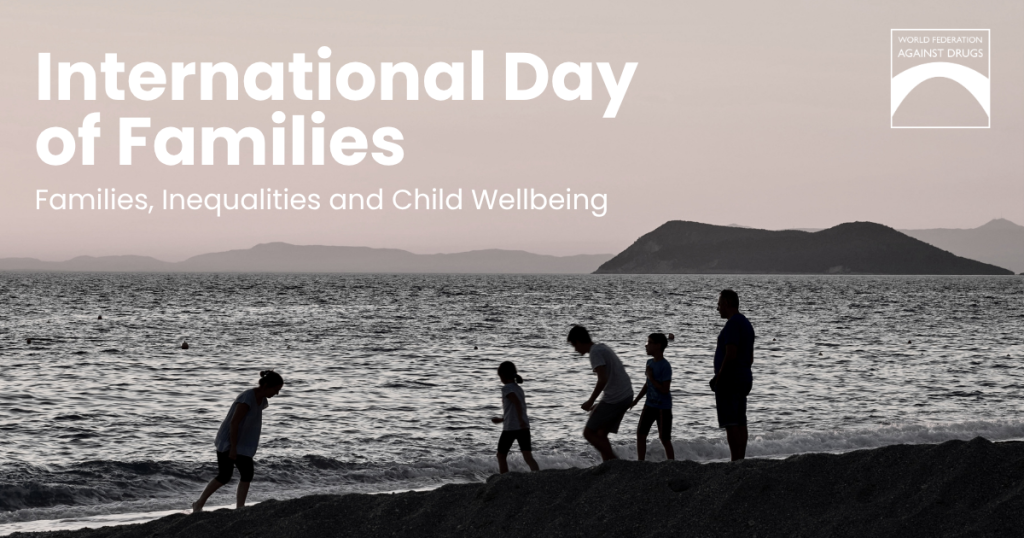
Today, on the International Day of Families, we recognise the essential role families play in shaping the health, development, and future opportunities of children and young people. This year’s theme, “Families, Inequalities and Child Wellbeing,” reminds us that the conditions in which children grow up profoundly influence their wellbeing, resilience, and ability to thrive.
At a time when many families around the world are facing growing pressures, including conflict, displacement, economic hardship, food insecurity, and the impacts of climate-related crises, the role of families in providing stability, care, and support has never been more important. Yet these same pressures can also place families under immense strain, increasing vulnerability and reducing access to the support systems that children and caregivers need.
Substance use is both shaped by and contributes to these inequalities. It affects individuals, families, and communities worldwide, with consequences that can span generations. Poverty, social exclusion, limited access to healthcare and education, trauma, and inadequate social protection can increase the risk of substance use and related harms. At the same time, substance use can deepen existing vulnerabilities, placing further strain on family relationships, economic stability, and child wellbeing.
Families are among the most important influences in a child’s life. Supportive relationships, stable caregiving, positive communication, and strong community connections can reduce risk factors, strengthen resilience, and provide a foundation for healthy development. Evidence consistently shows that family-based prevention approaches can play a significant role in reducing the likelihood of substance use among children and adolescents.
At the same time, it is important to recognise that families themselves may be deeply affected by substance use. When a parent, caregiver, sibling, or other family member experiences substance-related challenges, the impacts are often felt throughout the family unit. Children may experience instability, emotional distress, stigma, or adverse experiences that can affect their wellbeing and long-term development. Families in these situations often need support, not blame.
This is why responses to substance use must go beyond individual-focused approaches. Prevention remains essential, but effective responses must also recognise the family as a whole. Family-oriented approaches can help reduce stigma, encourage earlier help-seeking, strengthen treatment engagement, and improve recovery outcomes for individuals while also protecting and supporting children and caregivers. Where safe and appropriate, efforts should aim to strengthen family relationships and preserve supportive caregiving environments, recognising that family wellbeing and individual recovery are closely connected.
The United Nations Office on Drugs and Crime has identified evidence-based family skills programmes among the most effective approaches for preventing substance use among children and adolescents. UNODC’s Strong Families programme has demonstrated positive outcomes in strengthening parenting skills, improving family functioning, enhancing child wellbeing, and building resilience in contexts of heightened stress and vulnerability. These approaches show that investing in families is not only a prevention strategy, but also a meaningful investment in child wellbeing and healthier communities.
However, families cannot and should not carry this responsibility alone.
Families require enabling environments, equitable access to services, and policies that recognise the realities they face. This includes access to quality healthcare, mental health support, early intervention, social protection, education, community-based services, and treatment and recovery systems that are responsive not only to individuals, but to family needs as well.
Addressing substance use through a family lens also requires confronting stigma. Shame, fear of judgment, and concerns about social consequences can prevent individuals and families from seeking help, often delaying support until challenges become more severe. Children affected by substance use in the family may also experience isolation and silence, with their needs going unrecognised. Reducing stigma is therefore essential, not only to improve treatment access and recovery outcomes, but to protect the wellbeing of children and strengthen family resilience.
Meeting these challenges requires coordinated action. Governments, healthcare systems, schools, social services, civil society organisations, communities, and families all have a role to play in creating the conditions in which children and young people can grow up safe, supported, and resilient. Effective policy responses must recognise the interconnected nature of inequality, family wellbeing, child development, and substance use.
On this International Day of Families, WFAD reaffirms that strengthening families is central to effective prevention, treatment, and recovery. By reducing inequalities, investing in evidence-based and family-oriented approaches, and ensuring that families receive the support they need, we can build healthier and more resilient communities, and help ensure that every child and young person has the opportunity to thrive.
Leave a Reply
You must be logged in to post a comment.