

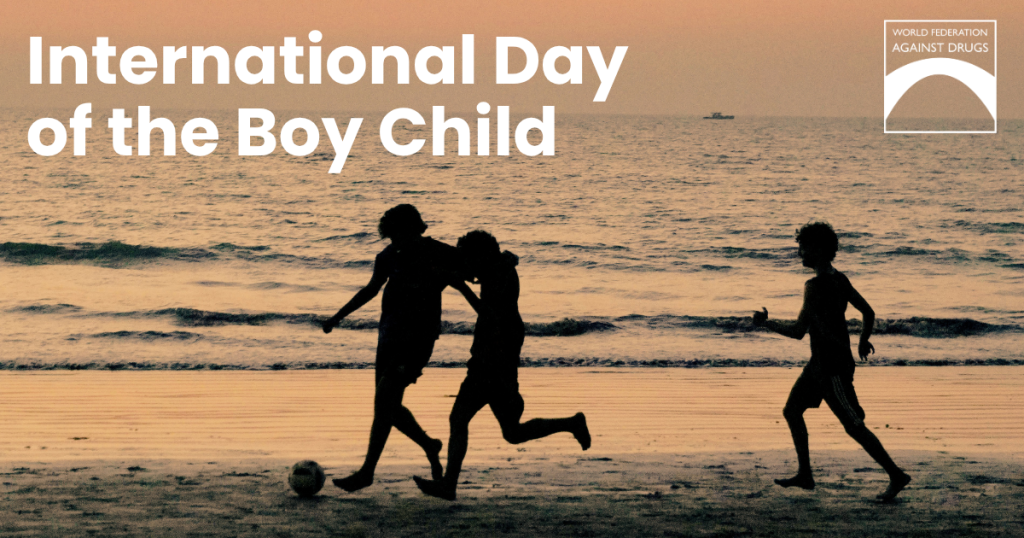
On the International Day of the Boy Child, WFAD highlights the importance of ensuring that every boy grows up in environments that support his wellbeing, healthy development, and ability to thrive.
Childhood and adolescence are critical periods in shaping lifelong health, resilience, and decision-making. Supporting boys early, with the emotional, social, and practical tools they need to navigate challenges, is not only essential for their wellbeing, but also a key part of effective prevention.
UNICEF estimates that 89 million boys aged 10 to 19 worldwide were living with a mental health condition in 2019, underscoring the importance of ensuring that boys have access to supportive environments where they feel seen, heard, and able to seek help when needed.
Boys may face distinct pressures as they grow, including expectations around toughness, independence, and emotional restraint that can make it harder to express vulnerability or ask for support. When emotional distress such as anxiety, loneliness, trauma, or low self-esteem remains hidden and unaddressed, unhealthy coping mechanisms, including substance use, may become more likely.
This is why prevention must be responsive to the realities boys experience at different stages of development. Supporting boys begins in early childhood, by encouraging emotional expression, empathy, healthy communication, and positive coping skills. As boys move into adolescence, peer relationships often become increasingly influential in shaping behaviour, identity, and decision-making. This makes positive peer norms, trusted mentors, and supportive social environments especially important protective factors.
Families, schools, sports clubs, youth organisations, and communities all play a role in creating the conditions in which boys can grow with confidence and resilience. Prevention approaches that recognise boys’ specific experiences and promote emotional wellbeing, healthy relationships, and informed decision-making can help reduce the risk of substance use and other harmful outcomes.
Supporting boys is not separate from the broader pursuit of equality and wellbeing; it is part of it. Building healthier societies requires ensuring that all children, including boys, are supported in ways that help them develop into respectful, emotionally resilient, and socially connected adults.
On this International Day of the Boy Child, WFAD calls for continued investment in evidence-based, gender-sensitive prevention and mental health support that helps every boy reach his full potential.
Leave a Reply
You must be logged in to post a comment.