
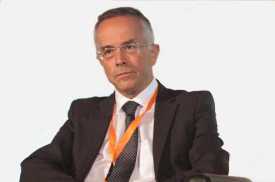
Dr. Gilberto Gerra
Protecting human rights and human health The Law, the Politics, and the Rhetoric of Illicit Drugs
Preventing and combating the illicit use of narcotic drugs and psychotropic substances and ensuring the availability of these substances for medical and scientific purposes in XXI century
Interviewer: Roxana Stere
——————————–
Q1: Is the goal of achieving a drug free society still an operational aim for the UN and for the UNODC? IF YES, can you please shortly explain how is this goal manifested in UNODC’s strategic planning, policy, programs and statements?
Dr. Gilberto Gerra: UNODC work and policy are perfectly in line with the Political Declaration 2009, unanimously approved by the CND. In that document at paragraph 22, page 11, Member States reaffirm, consistent with the objective of promoting a society free of drug abuse, their determination, within the framework of national, regional and international strategies, to counter the world drug problem and take effective measures to emphasize and facilitate healthy, productive and fulfilling alternatives to the illicit consumption of drugs, which must not become accepted as a way of life.
In this perspective, UNODC drug demand reduction activities strongly promote science-based primary prevention and a continuum of care that is recovery-oriented for people affected by drug dependence. UNODC helps social and health institutions to reduce the rate of initiation of drug use and to promote drug dependence treatment services responding to the different stages of the additive disease with the ultimate goal of detoxification, full rehabilitation, recovery and social reintegration.
Q2: In the UNODC´s HIV/AIDS work, done in partnership with UNAIDS, UNAIDS co- sponsors and other key partners, including civil society organizations, are the three international drug conventions considered as means of preventing drug use, drug dependence and implicitly injecting drug use, and therefore relevant means to prevent HIV/AIDS?
On one side, it is well-recognized that prevention of drug use and treatment of drug dependence, reducing the number of drug users and in particular of injecting drug users, are also concurring to reduce the risk of HIV infections and to facilitate anti- retroviral therapy. On the other side, specific interventions targeting the HIV epidemic are carried out by UNODC with outreach programs, harm reduction programs, low threshold services for drug users, opioid agonists maintenance therapy and the comprehensive package of 9 interventions defined by WHO, UNODC and UNAIDS.
The integration of drug demand reduction and HIV/AIDS interventions has been developed both at UNODC Headquarters and in the field where UNODC health teams are operating in a comprehensive way, often working with the same target population. HIV/AIDS interventions and drug demand reduction interventions maintain their science-based specificity and the reference to their own budget line. Although both sections operate following specific methods and international guidelines, a high level of interaction has been established in a rational and cost-effective way.
UNODC HIV/AIDS interventions targeting drug users are fully in line with the mandates of the Conventions, whose primary aim is to alleviate the suffering induced by drugs, included the health consequences of drug use.
Drug dependence is incontestably a multi-factorial health disorder, a treatable disease, and the dependence syndrome is defined in the International Classification of Diseases and Health Problems (ICD-10). Unlike other diseases such as heart disease or cancer, for example as there are many people who do not smoke and have healthy diets who have these diseases, drug dependence and other disorders related to substance use are entirely preventable by the decision not to use illicit drugs or substances.
Q3: Can we say that a disease affects all drug users, meaning all the 230 million people estimated to have used an illicit drug at least once in 2010?
Dr. Gilberto Gerra: For sure drug dependence is a chronic multi-factorial disease affecting the brain. A growing body of scientific evidence are demonstrating the neurobiological and behavioral bases of addiction, the condition characterized by uncontrollable compulsive behavior. This health problem is the expression of a Pavlovian conditioned behavior related to well-known changes in salient stimuli response, emotional memory, motivational drive and inhibitory control, with stable changes induced by drugs, affecting the transcription of neuronal genes. This makes this disease very serious and chronic, but fully treatable with both pharmacological and psychosocial interventions.
Fortunately, this “disease” condition is affecting only drug dependent patients and not drug users in general. The population of drug users who have not developed dependence may include different subgroups of people characterized by different psychosocial and biological conditions. Most of the adolescents in the developed countries of the western world are exposing themselves to drugs and alcohol abuse, not as a result of a free choice/decision but as the expression of their vulnerability: a long history of factors starting with genetics and temperament, attitude, parent-child attachment intensity, adverse childhood experiences, bonding to families, school engagement, early onset mental health disorders, degraded environment, social exclusion, peer pressure and availability of drugs are all contributing to reduce the resilience of adolescents experimenting with drugs and increases the risk rate. This long history of disadvantages has been found to influence the brain, preparing underlying neurobiological conditions making adolescents interested in drugs and unable to say ‘no’. We know today that this neurobiological condition of vulnerability can be compared to the pathogenesis of any other chronic and complex disease. In low income countries the vulnerability conditions are even more problematic with children/adolescents exposed to trauma, violence, extreme poverty, displacement, hunger, and work overload. These children are exposed to drugs to cope with terrible life situations.
Among the people exposed to drugs because of the previously listed vulnerability conditions, a certain rate of individuals are carrying additional susceptibility, making them at risk to develop “continuous use” and dependence, in particular pharmacogenetic characteristics.
Q4: Can we completely divorce drug demand, implicitly the illicit drug use, from drug production and trafficking? Can we erase any responsibility of the drug user on the larger drug phenomenon and its array of human rights, social, environmental, economical, political and security consequences?
In the large majority of cases drug users are not driving the process and are not responsible and aware of their dramatic condition. Also among the people who apparently use drugs for “recreational purposes”, many individuals are unconsciously affected by the vulnerability conditions previously mentioned. Healthy adolescents with good interpersonal and family relationships, good engagement at school, good perception and trust about future achievements, and consolidated vision, based on ideals and beliefs, are not using illicit drugs and abusing alcohol for “recreation”.
The subgroups of adolescent using illicit drugs and abusing alcohol for recreation should be better investigated with a psychological and behavioural assessment looking in depth to their neuropsychological vulnerability. This is not done because of a generalized social denial with respect to substance abuse among adolescents.
Roxana Stere: UNODC also underlines that “Everyone has a part to play in protecting the youth of the world from dangerous substances.”
Q5: Which is, in UNODC´s vision, the role drug users play in protecting the youth of the world from dangerous substances?
Having said this, I want to reiterate that the majority of drug users are affected by serious psychological and behavioral problems preexisting to drug abuse and making them less sensitive to rational arguments. It is difficult to explain to an adolescent affected by severe anxiety, in a condition of social isolation, that he or she should not self-medicate with cannabis to avoid supporting the criminal networks.
Q6: Given that Vienna Declaration and Programme of Action requires that “Convention and the rights of the child should be a priority in the United Nations system-wide action on human rights”, does UNODC consider that the international community should see and refer to “child protection from illicit drug use and prevention from involvement in drug supply side” as a human right, a legal obligation that none of the 193 States Parties made any reservation on, than just one matter of concern, among others, or a need?
Dr. Gilberto Gerra: Yes, UNODC policy line is very much in favor of seeing children and adolescents exposure to drugs as a violation of human rights. Being exposed to this medications without medical purpose, particularly during childhood and adolescence, may seriously compromise brain development, personality attitude and stability, interpersonal relationships and social abilities, motivations and general achievements in life. Criminal organizations disseminating drugs are violating human rights compromising the new generations, undermining the empowerment of the future communities with health and social consequences difficult to calculate.
Q7: Given that in many of its Concluding Observations on States Parties reports the Committee on the Rights of the Child has recommended State Parties to seek guidance and technical assistance, inter alia, from the United Nations Office on Drugs and Crime (UNODC), UNICEF and WHO, on CRC Article 33, how would you describe UNODC´s cooperation with the Committee, UNICEF, WHO and the OHCHR on child protection from illicit drugs matters?
Q8: Did the Committee solicit UNODC´s opinion when it has issued these recommendations? Which of the nine plus interventions included in the comprehensive package, and called sometimes harm reduction- if any, does UNODC consider appropriate for children.
Q9: How does UNODC ensure that every UNODC project or programme is itself consistent with human rights principles, including the principle of the best interest of the child, as stipulated by CRC Article 3, and its partners from civil society organisations and the private sector respect human rights principles and have a positive human rights record?
Dr. Gilberto Gerra: As reported in our 2012 position paper concerning the Promotion and Protection of Human Rights, UNODC is paying attention in designing projects and programs to the essential issue of human rights violations. In particular, no cooperation is provided to activities not in line with human rights. It is easy to understand that UNODC has the duty to operate also in areas of the world or in countries where human rights are not entirely respected. UNODC is disseminating science-based, ethical, humanitarian and compassionate practice. In some cases countries that are not fully in line with human rights start to move in the direction of good practice because of UNODC’s help in dissipating ignorance and applying science-based, ethical methodologies.
Q10: In the World Drug Report adult population is defined as person aged 15 to 64. Is there an estimate of how many of the 230 million people who used an illicit drug at least once in 2010, the 27 million problem drug users, and the drug-related deaths reported in 2012 are, in legal terms, children? Is there any global figure to indicate the extent of illicit drug use and problematic use among children and how many children are involved in production and trafficking in illicit drugs?
This terminological indeterminacy creates confusion among the politicians, national lawmakers and general public and could affect policymaking.
Q11: Is UNODC considering a terminological clarification at least as a mean of facilitating agreements among Member States on illicit drugs related matters?
——————————————————–
END OF INTERVIEW
——————————————————–
Interviewee: Dr. Gilberto Gerra
Gilberto Gerra, born on 24 May 1956, Parma – Italy
- Medical Doctor degree at the University of Parma in 1981
- Specialist in Internal Medicine 1986
- Specialist in Endocrinology 1989
Professor at numerous universities in Italy, on Neurology and Addiction Medicine.
Consultant to the ministries (Ministry of Health, Ministry of Interior, and Ministry of Social Affairs) in the field of substance use disorders treatment in Italy. .
Director of the Drug Addiction Treatment Centre in Parma from 1995 – 2002. .
Director of the Addiction Research Centre of Parma from 1993 – 2002. .
- Member of the College on Problem of Drug Dependence (CPDD)
- Member of the International Society of Psychoneuroendocrinology (ISPNE)
- Member of the Board of the Italian Society on Drug Addiction (SITD)
- Member of the scientific committee of the Federation of Dependence Treatment professionals in Italy (Feder.Ser.D)
2003-2006: Director of the National Observatory on Drugs, at the Prime Minister Office, Rome, Italy.
2004-2007: Member of International Narcotics Control Board (INCB) at the United Nations, Vienna.
2007-present: Chief of Drug Prevention and Health Branch, Division for Operations, United Nations Office on Drugs and Crime, Vienna.
He is Author and/or Co-Author of many articles in the field of psychobiology of substance abuse, psychoneuroendocrinology and clinical pharmacology (120 articles on scientific peer reviewed journals).
Interviewer: Roxana Stere
Roxana Stere is a PhD student at the National School of Political and Administrative Studies (SNSPA) Bucharest, Romania. She is a founding member of Guard 33 (G33), a research group hosted by Swedish United Nations Association, Haparanda. She worked as a human rights and legal consultant for World Federation Against Drugs (WFAD).
Roxana co-authored two books on human rights and international drug policy, with a special focus on children´s rights and the Convention on the Rights of the Child, and several articles and op-eds.
Leave a Reply
You must be logged in to post a comment.