

What can recovery capital look like in adolescence?
As part of Recovery Month, we are taking a closer look at recovery capital and what it can mean for adolescents in recovery.
Recovery is a long-term process, shaped not only by treatment and continued support, but also by the relationships, resources and environments that are part of everyday life.
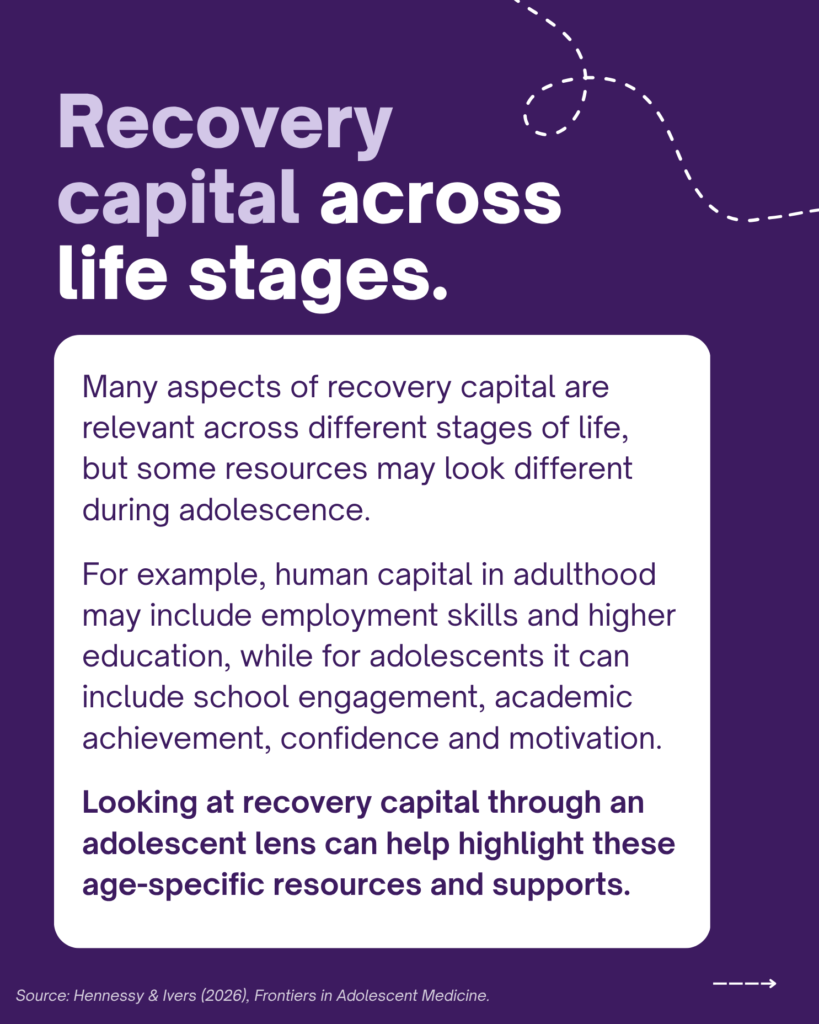
Many aspects of recovery capital are relevant across different stages of life, but some resources may take different forms during adolescence. For example, human capital in adulthood may include employment skills and higher education, while for adolescents it can include school engagement, academic achievement, confidence and motivation.
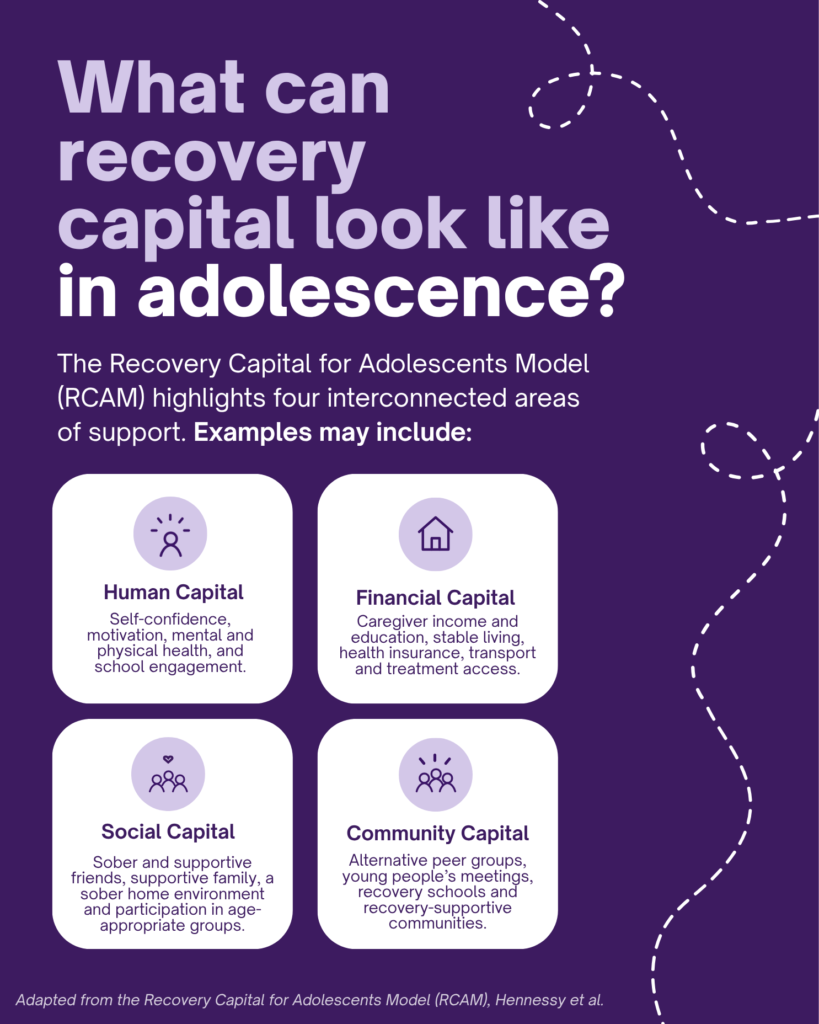
The Recovery Capital for Adolescents Model (RCAM) helps bring these age-specific resources into focus. It highlights four interconnected areas of recovery capital: human, financial, social and community capital. These can include personal strengths and wellbeing, stable living conditions and access to support, supportive family and peer relationships, and recovery-supportive groups and communities.
Adolescents have distinct developmental and recovery needs, and their recovery is closely connected to the family, peer and community systems around them.
Looking at recovery capital through an adolescent lens can help us better recognise the resources and support that may be particularly important at this stage of life, and how they can contribute to building and sustaining recovery over time.
This post draws on Hennessy & Ivers (2026), Understanding recovery capital for addiction recovery in adolescence and young adulthood, and the Recovery Capital for Adolescents Model developed by Hennessy, Cristello & Kelly.
Leave a Reply
You must be logged in to post a comment.